
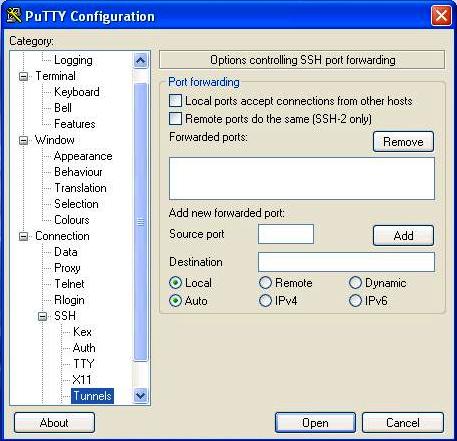
 Have you ever been in a situation where you feel like someone is watching you whilst you are working on your computer? Be it at the airport, restaurant, hotel, coffee shop, at a client or on the move!? By watching you I mean, closely monitoring your network traffic, that is, your web browsing, your POP3 emails , your FTP file transfers, open VNC sessions and last but not least your remote desktop (RDP) sessions. Well, the good news is, you can make it difficult for someone to easily spy on you or intercept your traffic. The process of preventing people from snooping or eavesdropping your traffic requires one to force or redirect all the traffic to go via or through an artificial and encrypted electronic passage irrespective of whether
Encryption
TrueCrypt Audit
 TrueCrypt better known for its real-time ‘on the fly’ and transparent encryption recently fell under the radar mainly because of the the fact that, not only does the source code behind it need to be reviewed but also the custom licensing governing it.
TrueCrypt is an open source based disk encryption and decryption software that runs on Windows, Mac OS X and Linux Operating systems. Some of its features are entire drive or storage encryption, that is, full hard drive or USB drive encryption. With TrueCrypt one can also encrypt a partition or drive where Windows is installed and even created a hidden partition within another partition, let alone hide volumes on data discs. I have personally and still use TrueCrypt and I must admit this software works like a dream. However, the major concern is the controversial
CryptoLocker Ransomware
Since the discovery of the unforgiving CryptoLocker ransomware in the wild late last year, sometime in September 2012, the Internet has been gripped by one kind of a mysterious and malicious program! But what is ransomware? What is CryptoLocker really capable of? Before I explain any further, we need to understand that this deadly malware is spreading in the form of spam emails. The spam emails appear to be coming from financial institutions and contain attachments which in actual fact is the CryptoLocker ransomware.
Ransomware comprises, I quote from Wikipedia “a class of malware which restricts access to the computer system that it infects, and demands a ransom paid to the creator of the malware in order for the restriction to be removed.” Assuming the spam email recipient opens the attachment, the CryptoLocker immediately